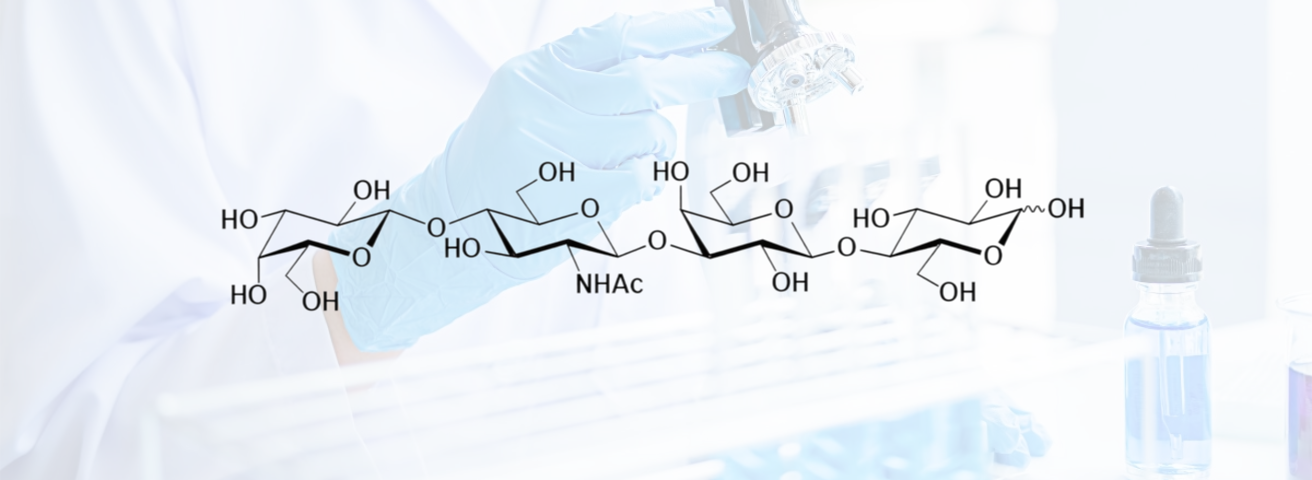
On February 5, 2026, the National Health Commission of the People’s Republic of China (NHC) officially issued Announcement No. 1 of 2026. Lacto-N-neotetraose (LNnT), independently developed by Bloomage, successfully passed the safety assessment for “Three New Foods” (covering new food raw materials, new food additives, and new food-related products) and was approved as a new food additive. This marks another major milestone for Bloomage’s Human Milk Oligosaccharides (HMOs) portfolio, following the approval of 2’-fucosyllactose (2’-FL) in 2025.
Bloomage is among the earliest domestic companies in China to independently develop and strategically invest in Human Milk Oligosaccharides (HMOs). In January 2024, its 2’-fucosyllactose (2’-FL) became the first in China to complete the filing as a new cosmetic ingredient. In early 2025, 2’-FL was further approved by the National Health Commission (NHC) as a nutrition fortifier.
Leveraging its globally leading synthetic biology and biomanufacturing platform, together with pilot-scale transformation facilities, Bloomage has to date established a reserve of more than 10 HMO monomers and secured over 40 HMOs-related patents. The Company has completed pilot-scale validation or trial production for six major HMO monomers and currently constructing a production line with an annual capacity of 1,000 metric tons of HMOs.
Human Milk Oligosaccharides (HMOs), due to their scientifically recognized functions such as modulation of the gut microbiota and support of neurodevelopment, play a critical role in the healthy growth of infants and young children. They are considered key components to enable infant formula to more precisely emulate the functional profile of human breast milk. Multiple infant formula products in China have already incorporated 2’-fucosyllactose (2’-FL) and Lacto-N-neotetraose (LNnT).

Leveraging its strengths in precision, cost efficiency, large-scale production capacity, and advanced high-end product manufacturing technologies, Bloomage is advancing research on bioactive compounds critical to human health, with a focus on three domains: extracellular matrix, cell-to-cell communication, and intracellular health. These life science insights and technologies are being translated into daily-life applications in aging intervention and tissue regeneration.
Studies have shown that HMOs are not only important modulators of neonatal gut immune system development, but also participate in intercellular signaling and regulation through complex biological mechanisms, serving as key molecules involved in cell-to-cell communication.
01 Molecular Information Carriers: The “Language” of Oligosaccharides
The diverse monosaccharide structures that constitute Human Milk Oligosaccharides (HMOs) function as molecular “messengers” carrying specific biological information. For example, 2’-fucosyllactose (2’-FL) and 3-fucosyllactose (3-FL) can selectively bind to lectin receptors on the surface of intestinal epithelial cells, thereby activating intracellular signaling pathways, regulating the expression of adhesion-related genes, promoting the colonization of beneficial microbiota, and inhibiting the invasion of pathogenic bacteria.
This form of “molecular dialogue” not only contributes to the establishment of the intestinal barrier but also modulates inflammatory responses through dendritic cell-mediated mechanisms, supporting immune homeostasis.
02 Immunomodulation: A “Balanced Regulatory Mechanism” in Intercellular Interaction
HMOs coordinate cellular behavior through multidimensional mechanisms to help maintain physiological homeostasis. On the one hand, HMOs have been shown to activate intestinal macrophages, promote the secretion of anti-inflammatory cytokines, and regulate excessive inflammatory responses, thereby protecting tissues from inflammatory damage.
On the other hand, by interfering with pathogen adhesion to host cells, HMOs may disrupt the chain of infection and protect infants against diseases such as diarrhea and meningitis. This bidirectional regulatory capacity contributes to maintaining a dynamic balance between immune defense and immune tolerance.
03 Systemic Signaling: An “Information Pathway” from the Gut to the Brain
The biological signaling functions of HMOs extend beyond the gastrointestinal tract and may exert systemic effects via the bloodstream. Sialylated HMOs can promote neuronal development and enhance synaptic connectivity, and are closely associated with cognitive abilities in infants.
In addition, HMOs can modulate the metabolic activity of the gut microbiota, indirectly affecting the secretion of host hormones and neurotransmitters, thus forming a communication bridge along the gut–brain axis.
The elucidation of HMO biosynthesis and signaling mechanisms is driving breakthroughs in related synthetic biology technologies. Precision fermentation has now enabled the large-scale production of multiple HMOs, providing a technological foundation for the development of functional foods and pharmaceuticals.
HMOs serve as a biological communication code that continues to inspire scientific exploration. Looking ahead, Bloomage aims to elucidate additional key enzymes and synthetic pathways to enable the biosynthesis and application of more HMO monomers, thereby supporting human health across the lifespan.